Can a Back Pain Treatment Clinic in Kolkata Help with Cupping Therapy?
Persistent back pain, tight shoulders, and muscle stiffness can make everyday activities uncomfortable. But could cupping therapy offer some relief? This traditional technique uses suction to create a pulling sensation on the skin and underlying tissues. When guided by a trained professional, cupping may help manage certain muscular discomforts alongside appropriate physiotherapy and personalised rehabilitation exercises.
Back pain, neck discomfort, and tight muscles can affect your daily routine, work, and sleep. Although rest may offer temporary comfort, persistent stiffness often needs a more structured approach. A Back Pain Treatment Clinic in Kolkata can help you explore suitable physiotherapy options, including cupping therapy. Understanding how cupping therapy reduces muscle tension can also help you make informed decisions about pain management. However, cupping does not suit everyone, and its benefits can vary depending on the underlying condition.
What Is Cupping Therapy and How Does It Work?
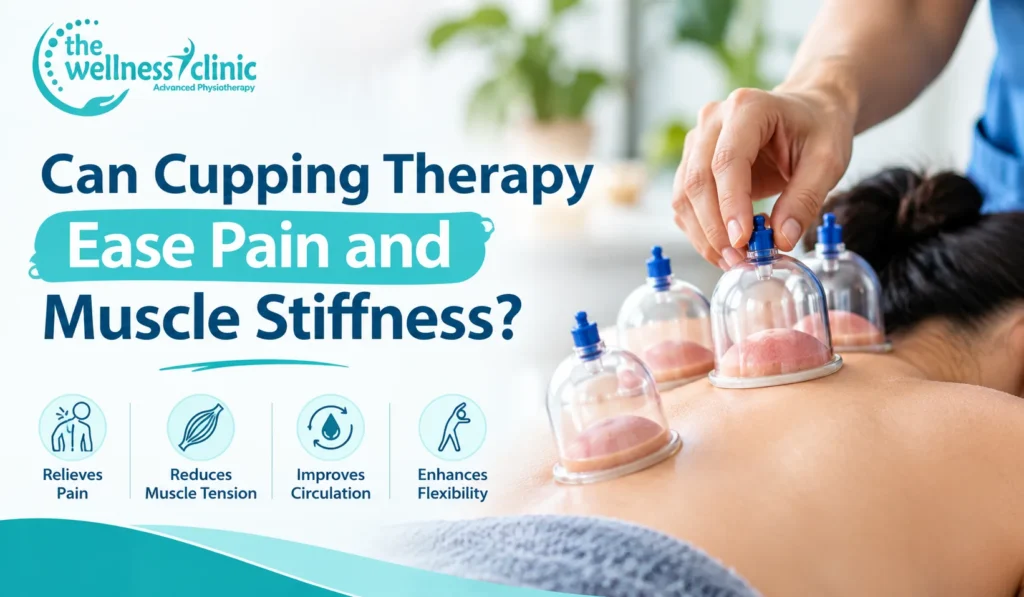
Cupping therapy is a traditional technique that uses special cups to create suction on the skin. A therapist places the cups over selected body areas, such as the back, shoulders, or neck.
The suction gently pulls the skin and superficial tissues upwards. Depending on the technique, a therapist may keep the cups in one position or move them across the skin. Check our success story click: https://thewellnessclinics.in/sucess-story/
Common types include:
- Dry cupping: Uses suction without making cuts in the skin.
- Moving cupping: Involves moving a cup over the skin with a suitable lubricant.
- Wet cupping: Involves superficial skin cuts and blood removal. This method carries additional risks and requires strict infection-control measures.
Physiotherapy settings generally focus on appropriate techniques based on individual needs, safety, and professional assessment.
How Does Cupping Therapy Reduce Muscle Tension?
Cupping creates a pulling sensation that may temporarily influence local tissue sensitivity and blood flow. Some people experience short-term relief from muscular discomfort after a session.
However, researchers have not established exactly how cupping works or confirmed all its proposed benefits.
A therapist may use cupping alongside other physiotherapy approaches to support:
- Temporary relief from muscular tightness.
- Relaxation of tense areas.
- Improved comfort during movement.
- Short-term management of certain musculoskeletal pain conditions.
- Participation in stretching and rehabilitation exercises.
Importantly, cupping should complement an appropriate treatment plan rather than replace exercise-based rehabilitation or medical care. Check our youtube video link: https://www.youtube.com/channel/UCNVKU6s4GdJZKE0USL0q3sg
What Are the Benefits of Cupping Therapy for Neck and Shoulder Pain?
Long working hours, poor workstation habits, repetitive movements, and limited physical activity can contribute to neck and shoulder discomfort.
Cupping therapy benefits for neck and shoulder pain may include temporary relief from muscular tightness and improved comfort for some individuals.
Here are some potential benefits:
- May Ease Muscle Tightness
Suction creates a gentle pulling sensation over the treated area. Some individuals report reduced feelings of tightness after a session.
- May Support Short-Term Pain Relief
Certain studies suggest that cupping may help reduce musculoskeletal pain in the short term. However, the overall evidence remains limited, and results differ between individuals.
- May Improve Comfort During Movement
When muscular discomfort decreases, some people find everyday movements more comfortable. Nevertheless, lasting mobility improvements usually require appropriate exercises and rehabilitation.
- May Encourage Relaxation
The treatment experience may help some individuals feel relaxed. However, cupping does not directly correct poor posture, muscle weakness, or underlying joint problems.
Can Cupping Therapy Help Relieve Back Pain?
Back pain can develop for several reasons, including muscle strain, prolonged sitting, poor movement habits, and certain spinal conditions.
Cupping may provide temporary relief for some people with muscular back discomfort. However, it cannot treat every cause of back pain.
A physiotherapist should first assess:
- The location and duration of your discomfort.
- Your movement patterns and flexibility.
- Muscle strength and physical limitations.
- Previous injuries and medical history.
- Signs that could point to an underlying health problem.
.
Based on these findings, the therapist can discuss whether cupping fits your rehabilitation plan.
Who Should Consider Cupping Therapy?
Cupping may be worth discussing with a qualified physiotherapist if you experience:
- Mild muscular tightness after physical activity.
- Neck and shoulder discomfort.
- Muscle-related back stiffness.
- General muscular tension associated with prolonged sitting.
- Certain musculoskeletal complaints where complementary treatment may be appropriate.
However, people with unexplained or severe pain should seek medical assessment before trying cupping.
Cupping may not suit individuals with bleeding disorders, fragile skin, active skin infections, open wounds, or certain vascular conditions. People taking blood-thinning medicines, pregnant individuals, and those with significant medical conditions should consult an appropriate healthcare professional first.
What Should You Expect During a Professional Cupping Therapy Session?
Understanding the treatment process can help you feel more comfortable before your appointment.
A typical dry cupping session may involve the following steps:
| Treatment stage | What happens |
| Initial assessment | The therapist reviews your symptoms and medical history. |
| Treatment planning | The therapist selects suitable areas and techniques. |
| Skin preparation | The treatment area is checked and cleaned. |
| Cup placement | Specially designed cups apply gentle negative pressure to the treated skin area.
. |
| Treatment period | The therapist monitors your comfort and skin response. |
| Aftercare | You receive guidance about hydration, activity, and skin care. |
Treatment duration and suction intensity depend on individual needs and professional judgement.
Mild circular marks or temporary bruising may appear after cupping. These usually fade over several days, although recovery time varies.
What Are the Possible Side Effects of Cupping Therapy?
Cupping is not completely risk-free. Understanding its possible side effects helps you make a safer choice.
Common side effects include:
- Temporary circular marks on the skin.
- Mild soreness or tenderness.
- Localised bruising.
- Temporary skin irritation.
Less common but more serious complications can include burns, blisters, infection, and persistent skin damage. Wet cupping carries additional risks, including blood loss and blood-borne infection if equipment or procedures do not meet proper safety standards.
Therefore, choose a trained practitioner who follows appropriate hygiene practices and uses properly maintained equipment.
Stop the treatment and seek medical advice if you experience severe pain, spreading redness, fever, or signs of infection.
How to Choose a Physiotherapy Clinic Offering Cupping Therapy?
Choosing the right clinic matters because effective pain management starts with an accurate assessment and an appropriate treatment plan.
Before booking an appointment, consider these factors:
- Qualified professionals: Check the therapist’s physiotherapy qualifications and relevant training.
- Individual assessment: Choose a clinic that evaluates your symptoms before recommending treatment.
- Hygiene standards: Ensure the clinic follows proper cleaning and infection-control practices.
- Treatment transparency: Ask about potential benefits, limitations, and side effects.
- Rehabilitation approach: Look for a combination of suitable exercises, movement training, and other evidence-informed methods.
- Progress monitoring: The therapist should review your response and adjust the plan when necessary.
A professional approach focuses on your overall recovery rather than promoting one treatment as a solution for every pain condition.
Why Choose The Wellness Clinic for Physiotherapy Guidance?
Managing back pain and muscle stiffness requires more than temporary comfort. It also involves understanding movement difficulties, improving physical function, and developing healthy daily habits.
The Wellness Clinic focuses on physiotherapy, fitness, and wellness services. Individuals looking for a Best Physiotherapy Clinic in Saltlake, Kolkata should consider the clinic’s professional expertise, assessment process, available treatments, and rehabilitation approach.
Before choosing cupping therapy, discuss your symptoms and treatment goals with the physiotherapy team. This helps determine whether the technique is appropriate and how it may fit into a broader recovery plan.
Where Can I Find Professional Cupping Therapy for Back Pain?
If you are searching for professional cupping therapy for back pain, start by looking for a physiotherapy clinic that offers individual assessments and safe treatment practices.
You can take these steps:
- Search for qualified physiotherapy providers in your area.
- Check their professional credentials and available services.
- Discuss your back pain symptoms during an initial consultation.
- Ask whether cupping is suitable for your condition.
- Understand the expected benefits, risks, and alternative treatments.
Book professional cupping therapy for muscle stiffness only after a qualified practitioner assesses your condition and confirms that the treatment is appropriate.
Conclusion: Take a Better Step Towards Comfortable Movement
Muscle stiffness and back discomfort can interfere with everyday life. Cupping therapy may offer temporary relief for some people when used appropriately alongside physiotherapy. However, individual assessment remains essential. The Wellness Clinic can help you explore suitable physiotherapy and wellness options. Prioritise professional guidance, safe treatment practices, and consistent rehabilitation to support better movement and long-term physical well-being. Patient’s can directly visit our map link if any confusion for appointment: https://maps.app.goo.gl/mEqNRhrhqfWWisam6
Frequently Asked Questions About Cupping Therapy
- Does cupping therapy help relieve back pain?
Cupping may provide short-term relief for some people with muscular back discomfort. However, evidence remains limited, and it does not treat every underlying cause of back pain.
- How does cupping therapy reduce muscle tension?
Cupping creates suction over selected areas of the body. This pulling sensation may influence local tissue sensitivity and provide temporary relief from muscular tightness for some individuals.
- What are the benefits of cupping therapy for neck and shoulder pain?
Some individuals report temporary relief from neck and shoulder tightness. However, results vary, and physiotherapy exercises may help address movement limitations and muscle weakness.
- Is cupping therapy painful?
Most people describe dry cupping as a pulling or tight sensation rather than sharp pain. However, excessive suction may cause discomfort, so the therapist should adjust the intensity.
- How long do cupping marks last?
Circular marks may remain for several days and sometimes longer. Their appearance and duration depend on suction intensity, skin sensitivity, and individual healing.
- How often should you get cupping therapy?
There is no universal treatment schedule. Frequency depends on your symptoms, health condition, treatment response, and the therapist’s assessment.
- Can cupping therapy replace physiotherapy exercises?
No. Cupping should not replace appropriate rehabilitation exercises, movement training, or medical treatment. A balanced physiotherapy plan addresses the underlying functional problems.
- Who should avoid cupping therapy?
People with bleeding disorders, fragile skin, active infections, open wounds, or certain vascular conditions may need to avoid cupping. Consult a healthcare professional if you have a medical condition or take blood-thinning medication.
Can Cupping Therapy Ease Pain and Muscle Stiffness?
October 30, 2026


How Can You Stay Healthy and Active After Turning 60?
October 15, 2026
Can Shockwave Therapy Relieve Pain Quickly?
October 6, 2026

How Can You Revive Spine Health With Physiotherapy?
September 30, 2026
How Desk Jobs Are Affecting Your Body Silently
September 25, 2026