
Best Physiotherapy Clinic in Kolkata: Can Sleep Position Help?
Finding a comfortable sleeping position can reduce pressure on the spine and make night-time discomfort easier to manage. For people with a slipped disc, the right posture may support spinal alignment, reduce muscle tension, and improve sleep quality. However, sleeping position should complement—not replace—an individualized assessment and physiotherapy plan.
A supportive sleeping posture can help maintain a more neutral spinal position and reduce unnecessary strain around the affected area. For people experiencing disc-related back pain, experimenting with different positions can identify what feels most comfortable.
What is the best sleeping position for slip disc relief?
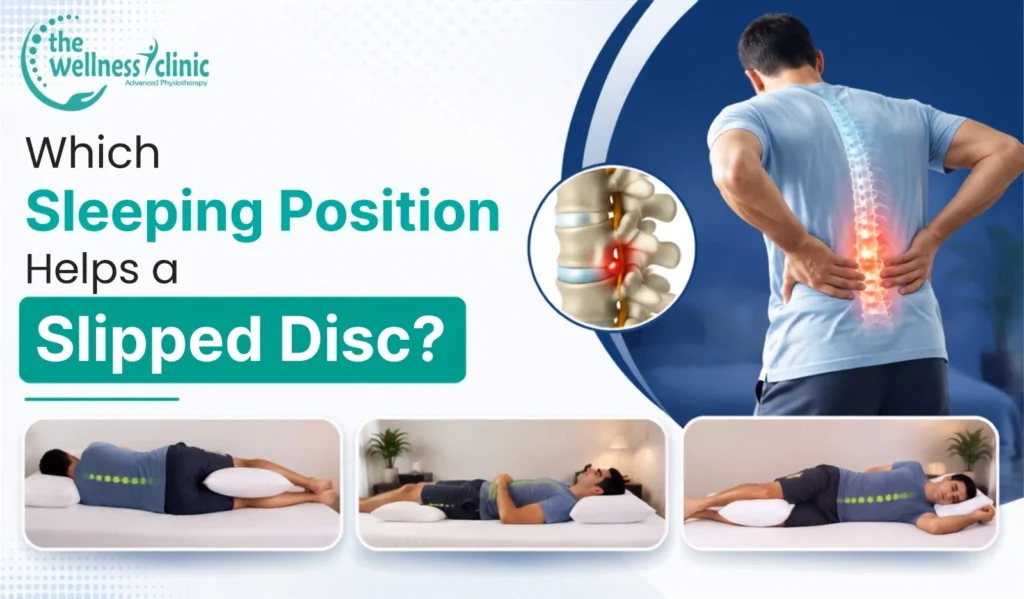
There is no single sleeping position that works for everyone with a slipped disc. However, side sleeping with a pillow between the knees or back sleeping with a pillow beneath the knees may help maintain a comfortable spinal alignment.
The best option depends on the location of the disc problem, symptoms, mobility, and individual comfort.
1. Try Side Sleeping With a Pillow Between Your Knees
Side sleeping can be comfortable for many people with lower-back discomfort.
To improve positioning:
- Maintain proper alignment of your head, neck, and spine while resting..
- Place a pillow between your knees.
- Keep your knees slightly bent.
- Avoid twisting your pelvis forward.
- Choose a mattress that provides adequate support.
The pillow between the knees can help prevent the upper leg from rotating forward, which may otherwise place additional stress on the lower back.
2. Sleep on Your Back With Support Under Your Knees
Back sleeping may help some people maintain a neutral spinal position.
Try placing a pillow beneath your knees so that your hips and knees are slightly flexed. This can reduce the tendency to over-arch the lower back.
A supportive head pillow is also important. Your neck should remain comfortably aligned rather than being pushed too far forward.
3. Is Stomach Sleeping Good for a Slipped Disc?
Stomach sleeping may be uncomfortable for some people with disc-related back pain because it can increase lower-back extension and requires the head to remain rotated to one side.
If stomach sleeping is the only position in which you can rest comfortably, a physiotherapist can help you determine whether modifications could make the posture more supportive. We are Best Back Pain Treatment Clinic in Kolkata.
Best Sleep Postures for Different Back Pain Problems
| Sleeping Position | Potential Benefit | Helpful Adjustment |
| Side sleeping | May support comfortable spinal alignment | Pillow between knees |
| Back sleeping | Can maintain a neutral position | Pillow beneath knees |
| Stomach sleeping | May be comfortable for some individuals | Consider professional guidance |
| Semi-reclined | May reduce discomfort for some people | Use appropriate support |
Featured snippet: For many people with a slipped disc, side sleeping with a pillow between the knees or back sleeping with a pillow under the knees may provide better comfort while supporting spinal alignment.
Best Back Pain Treatment Clinic in Kolkata: What Else Can Help?
Sleep positioning is only one part of managing slipped-disc symptoms. A physiotherapy programme may address pain, movement limitations, strength, flexibility, posture, and functional activities.
Treatment options may vary depending on the individual’s assessment and needs:
- Therapeutic exercises
- Core strengthening
- Mobility exercises
- Postural education
- Movement retraining
- Manual therapy where clinically appropriate
- Nerve mobility exercises when indicated
- Activity modification
- Ergonomic advice
- Progressive functional rehabilitation
Treatment should be individualized rather than based solely on the diagnosis of a slipped disc. Check our Success Story click: https://thewellnessclinics.in/sucess-story
How Should You Get Out of Bed With a Slipped Disc?
Sudden twisting or bending immediately after waking may aggravate discomfort. A controlled movement strategy can make getting out of bed more comfortable.
Try these steps:
- Turn onto your side.
- Keep your shoulders and hips moving together.
- Move your legs gently toward the edge of the bed.
- Use your arms to gently push your upper body into an upright position. .
- Stand slowly once balanced.
- Avoid sudden forward bending immediately after getting up.
If a particular movement consistently increases symptoms, discuss it with a physiotherapist.
Best Clinic for Spinal Injuries Treatment in Kolkata: When Should You Seek Help?
Every case of back pain may require a different treatment approach. . Professional assessment can be particularly useful when symptoms persist, interfere with sleep, affect daily activities, or travel into the buttock or leg.
A physiotherapist can assess:
- Pain behaviour
- Spinal movement
- Muscle strength
- Flexibility
- Functional limitations
- Neurological symptoms
- Postural habits
- Work and activity demands
This assessment helps determine an appropriate rehabilitation strategy.
Effective Treatment for Slip Disc and Back Pain
The best treatment for slip disc and back pain depends on the individual’s symptoms and clinical findings. Physiotherapy may form part of conservative management for many people, with treatment progressing according to tolerance and functional goals.
A rehabilitation plan may focus on:
Pain Management
Early treatment may emphasize comfortable movement, activity modification, and strategies that help prevent unnecessary aggravation.
Mobility
Appropriate mobility exercises can help restore comfortable movement without forcing painful ranges.
Strength
Progressive strengthening can improve the capacity of the muscles involved in spinal and hip movement.
Functional Rehabilitation
The primary goal is more than simply relieving pain.. Rehabilitation should help the person return to everyday activities, work, exercise, and other meaningful movements safely.
When Is It Appropriate to Book Physiotherapy for Slipped Disc Pain?
You may consider book physiotherapy for slipped disc pain when back discomfort is affecting sleep, movement, work, exercise, or everyday activities.
A physiotherapy assessment can help determine whether symptoms are appropriate for conservative rehabilitation or whether medical evaluation is needed.
Red-Flag Symptoms
Seek immediate medical attention if back pain occurs alongside symptoms such as:
- New loss of bladder or bowel control
- Numbness around the groin or saddle region
- Significant or rapidly worsening weakness
- Severe symptoms affecting both legs
- Other sudden neurological changes
These symptoms require prompt medical attention rather than relying solely on sleeping-position changes or home exercises.
Slipped Disc Physiotherapy Clinic: Building a Recovery Plan
A slipped disc physiotherapy clinic should focus on individualized assessment rather than providing the same exercise programme to everyone.
At The Wellness Clinic, rehabilitation can be structured around the individual’s symptoms, movement limitations, functional requirements, and recovery goals.
A patient-focused approach may involve:
Assessment → symptom management → movement restoration → strengthening → functional rehabilitation → prevention strategies
This progressive model helps connect treatment with practical daily activities.
How Can You Improve Your Sleep Environment?
Your sleeping position is only one component of sleep comfort. Consider the overall sleep environment.
Mattress Support
A mattress should provide comfortable support without causing excessive sinking or pressure.
Pillow Height
Your pillow should keep your head and neck comfortably aligned with the rest of your spine.
Consistent Positioning
If one posture consistently causes symptoms, try a modified side or back position rather than repeatedly forcing yourself to stay in an uncomfortable position.
Comfortable Transitions
Pay attention not only to how you sleep but also to how you turn, sit up, and stand after waking.
Sleep Position and Physiotherapy: A Content Cluster for Back Health
For long-term back-health education, sleeping position should be considered alongside other topics rather than as an isolated solution.
A useful content cluster can include:
- Slipped disc symptoms
- Sleeping positions for back pain
- Sciatica and nerve-related symptoms
- Core strengthening
- Ergonomic workspace setup
- Safe lifting techniques
- Posture and movement
- Physiotherapy for spinal conditions
- Back pain prevention
- Recovery after spinal injury
This broader approach helps patients understand how sleep, movement, strength, ergonomics, and rehabilitation can interact.
Quick Guide: Best Sleeping Positions for Slip Disc Relief
| If You Prefer | Try This |
| Side sleeping | Pillow between knees |
| Back sleeping | Pillow beneath knees |
| Changing positions | Move slowly and avoid sudden twisting |
| Getting out of bed | Roll to your side before sitting up |
| Persistent symptoms | Consider a professional assessment |
| Severe neurological symptoms | Seek urgent medical evaluation |
Frequently Asked Questions
What is the best sleeping position for slip disc relief?
For many people, side sleeping with a pillow between the knees or back sleeping with a pillow under the knees can provide comfort. The ideal position varies according to symptoms and individual spinal mechanics.
Can sleeping position cure a slipped disc?
No. A sleeping position cannot cure a slipped disc. It may help reduce discomfort and support better sleep while an appropriate treatment and rehabilitation programme addresses the underlying functional problems.
Is it better to sleep on your back or side with a slipped disc?
Both may be suitable. Side sleeping with a pillow between the knees and back sleeping with a pillow under the knees are commonly used options. Personal comfort and symptom response should guide the choice.
Should I sleep with a pillow under my knees?
If you sleep on your back, placing a pillow beneath your knees may help reduce excessive lower-back arching and make the position more comfortable.
Can physiotherapy help slipped disc pain?
Physiotherapy can help many people manage disc-related back pain through individualized exercise, movement rehabilitation, education, and functional strategies. Treatment should follow an appropriate clinical assessment.
When should I book physiotherapy for slipped disc pain?
Consider booking an assessment when pain persists, limits normal activities, affects sleep, or makes movement difficult. Urgent medical assessment is needed for serious neurological warning signs.
Is stomach sleeping bad for a slipped disc?
Stomach sleeping may aggravate symptoms in some people because of the position of the lower back and neck. However, individual responses vary, so comfort and symptom behaviour should be considered.
How can I get out of bed without worsening back pain?
Roll onto your side, move your legs toward the edge, use your arms to push yourself upright, and stand gradually. Avoid sudden twisting or deep forward bending. Check Our Patient’s testimonial click: https://bit.ly/4gBV95y
Conclusion
The best sleeping position for slipped disc relief is the one that keeps your spine comfortable and minimizes symptom aggravation. Side sleeping with knee support or back sleeping with a pillow under the knees may help. Persistent or radiating symptoms deserve professional assessment. With individualized physiotherapy, education, and progressive rehabilitation, patients can work toward safer movement and improved daily function. Visit our Map Address click: https://maps.app.goo.gl/LS7zB9GecdTT7oJc7
Recent Posts

How Can You Stay Healthy and Active After Turning 60?
October 15, 2026

Can Shockwave Therapy Relieve Pain Quickly?
October 6, 2026

How Can You Revive Spine Health With Physiotherapy?
September 30, 2026
How Desk Jobs Are Affecting Your Body Silently
September 25, 2026

Can Physiotherapy Help Treat Trigger Fingers?
September 23, 2026

Can Physiotherapy Help Tennis Elbow Heal Faster?
September 16, 2026