What Is Guillain-Barré Syndrome?
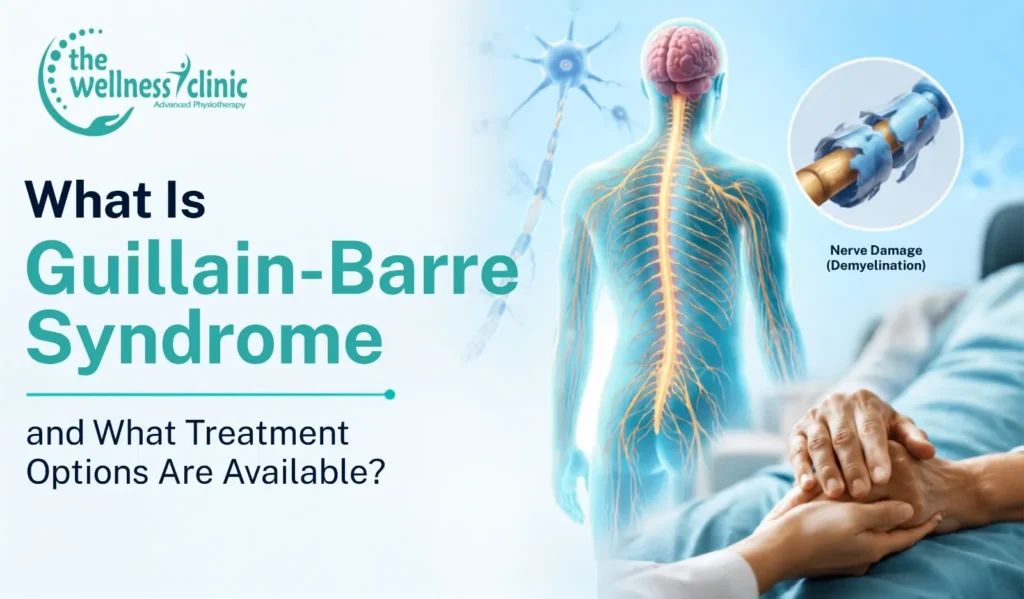
Guillain-Barré Syndrome (GBS) is a rare neurological disorder in which the immune system mistakenly attacks peripheral nerves, causing weakness, tingling, numbness, and sometimes paralysis. Understanding what is Guillain-Barré Syndrome and how it affects the body? is important for early medical evaluation. A Best Neuro Rehabilitation Centre in Kolkata, such as The Wellness Clinic, can support recovery through individualized neurological rehabilitation and physiotherapy.
Guillain-Barré Syndrome is an acute autoimmune condition affecting the peripheral nervous system—the network that carries signals between the brain, spinal cord, muscles, and sensory organs.
GBS often develops rapidly, with symptoms progressing over hours or days. In some people, weakness begins in the legs and moves upward toward the arms and upper body. Severe cases may affect the muscles involved in breathing and swallowing and require urgent hospital care.
GBS is not one single disease pattern. Several variants exist, including:
- Acute inflammatory demyelinating polyradiculoneuropathy (AIDP) – the most common form in many countries.
- AMAN – primarily affects motor nerves.
- AMSAN – affects motor and sensory nerves.
- Miller Fisher syndrome – commonly associated with abnormal eye movements, poor coordination, and reduced reflexes.
What Causes Guillain-Barré Syndrome?
The exact cause is not always known. GBS frequently occurs after an infection, when the immune response mistakenly targets components of peripheral nerves.
Possible triggers include:
- Respiratory infections
- Gastrointestinal infections
- Certain viral illnesses
- Campylobacter jejuni infection
- Rarely, surgery or other immune-system triggers
Having an infection does not mean a person will develop GBS. The condition remains uncommon.
What Are the Symptoms of Guillain-Barré Syndrome?
Symptoms can vary in severity and progression. Common signs include:
- Tingling or pins-and-needles sensations
- Weakness beginning in the legs
- Difficulty walking or climbing stairs
- Reduced or absent reflexes
- Muscle pain or abnormal sensations
- Weakness affecting the arms or face
- Difficulty swallowing or speaking in severe cases
- Breathing difficulty in serious cases
Rapidly increasing weakness or breathing difficulty requires immediate emergency medical assessment.
What Are the Symptoms, Causes, and Treatment of Guillain-Barré Syndrome?
| Aspect | Key Information |
| Symptoms | Weakness, tingling, numbness, reduced reflexes and mobility difficulties |
| Common trigger | Often follows an infection |
| Body system affected | Peripheral nervous system |
| Diagnosis | Neurological examination, nerve tests and other investigations |
| Medical treatment | May include IVIG or plasma exchange |
| Rehabilitation | Physiotherapy, mobility training and functional rehabilitation |
How Is Guillain-Barré Syndrome Diagnosed?
Guillain-Barré Syndrome Diagnosis and Treatment
Diagnosis is primarily clinical and requires assessment by a qualified medical professional. Doctors may evaluate muscle strength, reflexes, sensation, coordination, and symptom progression.
Depending on the presentation, investigations may include:
- Nerve conduction studies and electromyography (EMG)
- Lumbar puncture
- Blood tests to exclude other conditions
- Respiratory monitoring when weakness is significant
- Additional investigations when clinically appropriate
There is no single test that independently confirms every case of GBS. Doctors consider the overall clinical picture and test results.
How Is Guillain-Barré Syndrome Treated?
GBS can require hospital-based medical management because symptoms may progress quickly.
Medical Treatment
Two established immune therapies are commonly used:
- Intravenous immunoglobulin (IVIG)
- Plasma exchange (plasmapheresis)
These treatments aim to reduce the harmful immune activity affecting the nerves. Supportive care may also be necessary to monitor breathing, heart rate, blood pressure, swallowing, nutrition, and other complications.
Treatment decisions should always be made by the patient’s medical team based on disease severity and individual circumstances.
How Does Rehabilitation Help After GBS?
Recovery can continue after the acute medical phase. Neurological rehabilitation focuses on restoring safe movement and helping patients regain independence.
A Best Physiotherapy Clinic in Kolkata can provide rehabilitation interventions tailored to the individual’s strength, balance, endurance, mobility, and functional limitations.
Rehabilitation May Include
- Strength and flexibility exercises
- Balance and coordination training
- Gait and walking rehabilitation
- Transfer and mobility practice
- Functional task training
- Respiratory and endurance support when appropriate
- Education about fatigue and activity management
- Home-exercise guidance
The rehabilitation plan should progress according to recovery rather than relying on a fixed exercise routine. Check Our Success Story click: https://thewellnessclinics.in/sucess-story
What Should Patients Know About GBS Recovery?
Recovery varies considerably. Some people improve within weeks or months, while others experience prolonged weakness, fatigue, pain, or mobility limitations.
Important rehabilitation principles include:
- Set realistic functional goals.
- Increase activity gradually.
- Avoid excessive fatigue during rehabilitation.
- Monitor changes in strength and function.
- Use appropriate mobility assistance when necessary.
- Maintain communication between medical and rehabilitation professionals.
Recovery can vary from person to person and may not follow the same timeline. A personalized rehabilitation program can help address changing functional needs.
When Should You Book a Guillain-Barré Syndrome Specialist Consultation?
If you or a family member develops rapidly progressing weakness, unexplained difficulty walking, significant numbness, or breathing or swallowing problems, prompt medical assessment is essential.
For ongoing rehabilitation needs, patients can book Guillain-Barré Syndrome specialist consultation and discuss an individualized neurological physiotherapy plan with qualified professionals.
Why Choose The Wellness Clinic for Neuro Rehabilitation?
The Wellness Clinic can approach neurological rehabilitation with an individualized, function-focused model. Instead of applying the same exercise program to every patient, rehabilitation can be adapted according to mobility, muscle strength, balance, endurance, fatigue, and daily-life goals.
For patients recovering from GBS, coordinated assessment and progressive rehabilitation can help support safer movement and greater functional independence.
Conclusion
Guillain-Barré Syndrome is a serious neurological condition requiring timely medical assessment and appropriate treatment. Because recovery can involve persistent weakness, fatigue, balance problems, and mobility limitations, rehabilitation plays an important supportive role. With individualized neurological physiotherapy, structured functional training, and appropriate medical supervision, patients can work toward safer movement, improved independence, and meaningful recovery throughout their rehabilitation journey. Check our map Address:https://maps.app.goo.gl/ruTqYR3eN52Vosi6A
FAQ: Guillain-Barré Syndrome
What Is Guillain-Barré Syndrome and How Can It Impact the Body?
GBS is an autoimmune neurological disorder in which the immune system damages peripheral nerves. This can interrupt nerve signals and cause weakness, altered sensation, reduced reflexes, and, in severe cases, breathing or swallowing difficulties.
Is Guillain-Barré Syndrome contagious?
No. GBS itself is not contagious. It can sometimes develop after an infection, but the neurological condition is an abnormal immune response rather than an infection that spreads from person to person.
Can Guillain-Barré Syndrome be cured?
Many people recover substantially, but recovery differs between individuals. Medical treatment can reduce disease progression, while rehabilitation addresses weakness and functional limitations during recovery.
Can physiotherapy help GBS recovery?
Yes. Individualized physiotherapy may help improve mobility, strength, balance, endurance, and functional independence. Exercise intensity should be determined according to the person’s clinical condition and recovery stage.
How long does Guillain-Barré Syndrome recovery take?
There is no universal recovery timeline. Some people improve relatively quickly, while others require rehabilitation for months or longer. The severity of nerve involvement and complications can influence recovery.
Recent Posts

How Can You Stay Healthy and Active After Turning 60?
October 15, 2026
Can Shockwave Therapy Relieve Pain Quickly?
October 6, 2026
How Can You Revive Spine Health With Physiotherapy?
September 30, 2026
How Desk Jobs Are Affecting Your Body Silently
September 25, 2026

Can Physiotherapy Help Treat Trigger Fingers?
September 23, 2026
Can Physiotherapy Help Tennis Elbow Heal Faster?
September 16, 2026