
How Does a Best Sports Rehabilitation Centre Aid Recovery?
Robotic Physiotherapy for Sports Injuries: Can It Enhance Recovery?
Sports injuries often require more than rest. Recovery may involve restoring joint mobility, muscle strength, balance, coordination, flexibility, and sport-specific movement. Robotic rehabilitation centers for sports injuries services can complement conventional physiotherapy by using technology-assisted exercises and measurable movement patterns.
For athletes looking for Best Sports Rehabilitation Centre in Kolkata, the priority should be a personalized rehabilitation program that combines clinical expertise with appropriate technology.
What Is Robotic Physiotherapy for Sports Injuries?
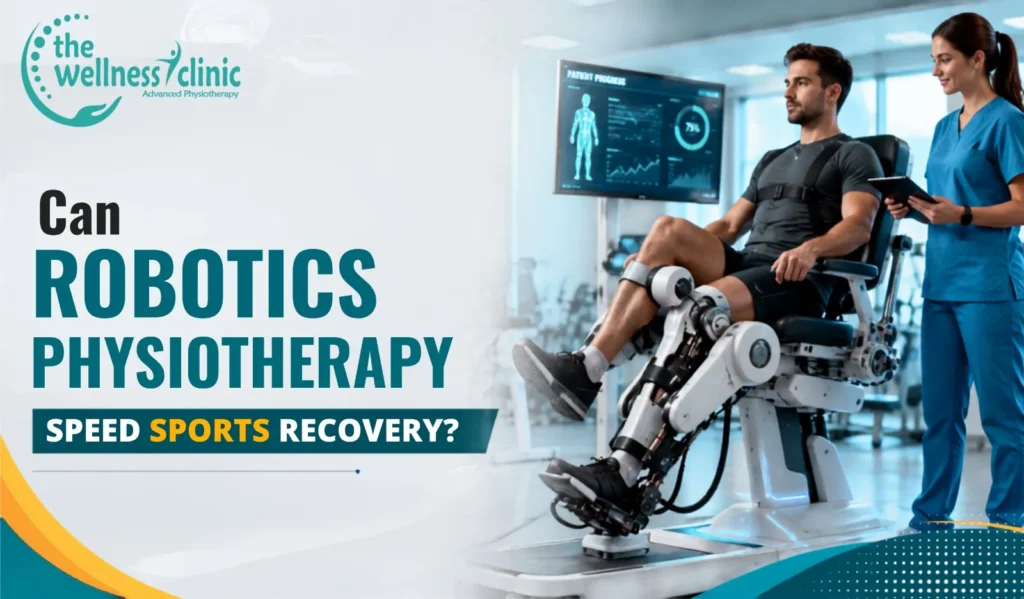
Robotic physiotherapy uses technology-assisted equipment to support selected rehabilitation movements. Depending on the device and clinical goal, robotic systems can assist, guide, resist, or repeat movements in a controlled environment.
Rather than replacing the physiotherapist, robotics can serve as a rehabilitation tool.
A comprehensive program may combine:
- Clinical assessment
- Therapeutic exercises
- Robotic-assisted movement
- Strength training
- Balance exercises
- Mobility work
- Functional training
- Sport-specific conditioning
- Progress monitoring
The exact role of robotics depends on the individual’s injury, symptoms, functional limitations, and rehabilitation goals.
How Does Robotic Physiotherapy Help Sports Injuries?
How does robotic physiotherapy help sports injuries? It can provide controlled, repetitive, and measurable movement during appropriate rehabilitation exercises while allowing physiotherapists to monitor progress and adjust the program.
Potential advantages include:
- Controlled movement – Helps regulate the range and pattern of selected exercises.
- Repetition – Allows structured practice of specific movements.
- Measurable training – Certain systems can provide performance-related data.
- Progressive rehabilitation – Exercise intensity can be adjusted according to recovery.
- Movement retraining – May support the restoration of coordinated movement.
- Reduced variability – Technology can provide consistent assistance during selected tasks.
Robotic therapy should be viewed as one component of rehabilitation rather than a standalone cure.
Why Is Robotic Rehabilitation Becoming Relevant for Athletes?
Athletes often need to regain both basic physical function and sport-specific performance.
For example, a footballer recovering from a lower-limb injury may need to progress from basic mobility exercises to strength, balance, running mechanics, agility, and eventually sport-specific drills.
A technology-assisted rehabilitation program can potentially support structured progression through different stages.
Key rehabilitation goals include:
| Recovery goal | How rehabilitation may address it |
| Mobility | Controlled movement and flexibility exercises |
| Strength | Progressive resistance training |
| Balance | Stability and proprioception exercises |
| Coordination | Repeated movement patterns |
| Functional movement | Task-specific exercises |
| Endurance | Progressive conditioning |
| Performance | Sport-specific rehabilitation |
The appropriate combination depends on the individual’s clinical condition.
What Sports Injuries May Benefit From Physiotherapy?
Physiotherapy is commonly used as part of rehabilitation for many musculoskeletal and sports-related conditions.
Examples include:
- Knee injuries
- Ankle sprains
- Muscle strains
- Ligament injuries
- Tendon problems
- Shoulder injuries
- Elbow injuries
- Sports-related back pain
- Post-operative rehabilitation
- Movement and stability deficits
However, not every injury requires robotic rehabilitation. A qualified physiotherapist should first determine whether technology-assisted treatment is appropriate.
Robotic Rehabilitation for Faster Recovery After Sports Injury
The phrase robotic rehabilitation for faster recovery after sports injury should not be interpreted as a guarantee of faster healing.
Recovery time depends on several factors, including:
- Type and severity of injury
- Tissue involved
- Age and general fitness
- Previous injuries
- Treatment adherence
- Sleep and nutrition
- Training load
- Surgical requirements
- Rehabilitation progression
Technology may make certain exercises more controlled or measurable, but biological healing still requires appropriate time.
A responsible rehabilitation strategy therefore focuses on safe progression rather than simply rapid progression.
What Are the Stages of Robotic Sports Rehabilitation?
Stage 1: Assessment
The physiotherapist evaluates:
- Pain
- Range of motion
- Muscle strength
- Balance
- Functional limitations
- Movement patterns
- Sporting requirements
This establishes the rehabilitation baseline.
Stage 2: Early Movement
When clinically appropriate, gentle movement and mobility exercises may be introduced.
The objective is to restore movement without unnecessarily aggravating the injured area.
Stage 3: Strength and Control
The athlete gradually works on:
- Muscle activation
- Strength
- Stability
- Balance
- Coordination
Robotic or technology-assisted exercises may be incorporated where clinically suitable.
Stage 4: Functional Training
Rehabilitation becomes increasingly relevant to everyday and sporting movements.
Exercises may include:
- Squatting
- Stepping
- Landing mechanics
- Direction changes
- Controlled dynamic movements
Stage 5: Sport-Specific Conditioning
The final stages may involve progressively demanding activities that replicate the requirements of the athlete’s sport.
Return-to-sport decisions should be based on functional readiness and professional evaluation rather than time alone.
Can Robotic Physiotherapy Improve Movement Control?
Movement control is an important part of sports rehabilitation.
After an injury, an athlete may develop compensatory movement patterns because of pain, weakness, reduced confidence, or limited mobility.
Rehabilitation can help address these issues through progressive:
- Strength training
- Balance work
- Coordination exercises
- Proprioceptive training
- Functional movement
- Sport-specific drills
Technology-assisted systems may provide additional structure for selected exercises, while the physiotherapist interprets the athlete’s movement and adjusts treatment accordingly.
Why Is Personalized Sports Rehabilitation Important?
Two athletes with the same diagnosis may not have identical rehabilitation needs.
Consider two people with knee injuries:
Athlete A: recreational runner returning to jogging.
Athlete B: competitive football player returning to sprinting and rapid direction changes.
Their rehabilitation goals are different.
A personalized program considers:
- Sport
- Position or activity
- Injury history
- Current physical capacity
- Performance requirements
- Recovery stage
- Functional goals
This is why choosing a Best Sports Rehabilitation Centre in Kolkata should involve evaluating the quality of assessment and rehabilitation planning, not simply the availability of robotic equipment.
How Can Athletes Book Robotic Physiotherapy for Sports Injuries?
People searching to book robotic physiotherapy for sports injuries should ideally begin with a professional assessment.
Before booking, ask:
- Is the facility experienced in sports rehabilitation?
- Is robotic therapy clinically appropriate for the injury?
- Who will supervise the treatment?
- How is progress measured?
- Can conventional physiotherapy be combined with technology?
- Is the program individualized?
- What are the expected rehabilitation milestones?
- How will return-to-sport readiness be evaluated?
These questions help athletes make informed decisions rather than choosing treatment solely because it uses advanced technology.
The Wellness Clinic: Combining Technology With Physiotherapy Expertise
The Wellness Clinic can be positioned within a modern rehabilitation approach where technology complements professional physiotherapy.
For sports-injury recovery, the emphasis should remain on proper assessment, progressive exercise, functional rehabilitation, movement quality, and appropriate return-to-activity planning.
Robotic rehabilitation can potentially add controlled and repeatable training to selected parts of the rehabilitation process. However, the physiotherapist’s clinical judgment remains essential for deciding when and how technology should be incorporated. Check Our Youtube to learn more about us click: https://www.youtube.com/channel/UCNVKU6s4GdJZKE0USL0q3sg
Robotic Physiotherapy vs Conventional Physiotherapy
| Feature | Conventional physiotherapy | Robotic-assisted physiotherapy |
| Clinical assessment | Yes | Yes |
| Hands-on techniques | Commonly used | May be combined |
| Therapeutic exercise | Core component | Core component |
| Technology assistance | May vary | Central component |
| Repetitive movement | Exercise dependent | Can be technology assisted |
| Data monitoring | Depends on tools | May provide additional metrics |
| Personalization | Essential | Essential |
| Physiotherapist supervision | Important | Important |
The two approaches do not necessarily compete. In many rehabilitation settings, technology can complement established physiotherapy methods.
What Should Athletes Expect From a Robotic Rehabilitation Session?
A session may vary depending on the equipment and rehabilitation objective.
A typical process may involve:
Assessment → Warm-up → Technology-assisted exercise → Strength/mobility work → Functional training → Cool-down → Progress review
The physiotherapist may adjust the exercise parameters according to the athlete’s response.
If pain, swelling, unusual weakness, or other concerning symptoms develop, the rehabilitation plan may need reassessment
What Makes a Good Robotic Rehabilitation Centre for Sports Injuries?
A quality facility should not be judged by robotics alone.
Look for these characteristics:
- Qualified physiotherapy professionals
- Sports rehabilitation experience
- Individual assessment
- Evidence-informed treatment planning
- Appropriate rehabilitation technology
- Progressive exercise programs
- Functional movement training
- Regular progress assessment
- Clear communication
- Return-to-sport planning
The strongest rehabilitation model combines people, clinical expertise, exercise, and technology.
How Does Technology Support Return to Sport?
Returning to sport is more than simply becoming pain-free.
An athlete may need adequate:
- Strength
- Range of motion
- Balance
- Coordination
- Agility
- Endurance
- Movement control
- Sport-specific capacity
Technology may support specific components of this process, but the final return-to-sport decision should consider functional performance and clinical assessment.
Benefits of Robotic Physiotherapy
Potential benefits of robotic physiotherapy for sports rehabilitation include:
- Controlled movement
- Repetitive exercise
- Structured rehabilitation
- Progress monitoring
- Movement retraining
- Adjustable exercise assistance
- Support for functional recovery
- Integration with conventional physiotherapy
These benefits vary according to the technology, injury, and individual rehabilitation plan. Check Patient;s Reviews click: https://thewellnessclinics.in/sucess-story
Conclusion
Robotic physiotherapy is adding new possibilities to sports rehabilitation by supporting controlled movement, repetition, monitoring, and progressive exercise. However, technology works best when guided by professional expertise and individualized treatment planning. Athletes seeking a Best Sports Rehabilitation Centre in Kolkata should consider assessment, evidence-informed care, functional training, and return-to-sport planning alongside robotic rehabilitation technology for a balanced recovery strategy. Check Our map link click: https://maps.app.goo.gl/VXMLeqzfqzgcXJ8R9
Frequently Asked Questions
How does robotic physiotherapy help sports injuries?
Robotic physiotherapy can support controlled and repetitive movements during selected rehabilitation exercises. It may help improve mobility, strength, coordination, balance, and functional movement when appropriately integrated into an individualized physiotherapy program.
Is robotic physiotherapy suitable for every sports injury?
No. Suitability depends on the injury, recovery stage, symptoms, functional limitations, and treatment goals. A physiotherapist should assess the athlete before recommending robotic rehabilitation.
Can robotic physiotherapy speed up sports injury recovery?
It may support efficient and structured rehabilitation, but it cannot guarantee faster healing. Recovery depends on the injury, tissue healing, treatment plan, adherence, and individual factors.
What is a robotic rehabilitation centre for sports injuries?
It is a rehabilitation facility that uses robotic or technology-assisted equipment as part of physiotherapy for appropriate patients. Treatment should still involve professional assessment and individualized rehabilitation planning.
Can I book robotic physiotherapy for sports injuries?
Yes, where the facility provides this service. It is advisable to undergo a professional assessment first so the physiotherapist can determine whether robotic therapy is appropriate for your injury and recovery stage.
Is robotic physiotherapy better than conventional physiotherapy?
Not necessarily. Robotic therapy and conventional physiotherapy can complement each other. The best approach depends on the athlete’s condition, goals, rehabilitation stage, and clinical assessment.
How long does sports injury rehabilitation take?
There is no universal recovery period. Minor injuries may improve relatively quickly, while ligament injuries, fractures, surgery, and significant muscle or tendon injuries can require substantially longer rehabilitation.
When can an athlete return to sports?
Return to sport should depend on functional recovery rather than a fixed number of days. Strength, mobility, balance, movement quality, sport-specific ability, and clinical readiness should all be considered.
Why choose a Best Sports Rehabilitation Centre in Kolkata?
A suitable centre should provide qualified professionals, individualized assessment, progressive rehabilitation, appropriate technology, functional training, and structured return-to-sport guidance.
Recent Posts

How Can You Stay Healthy and Active After Turning 60?
October 15, 2026

Can Shockwave Therapy Relieve Pain Quickly?
October 6, 2026
How Can You Revive Spine Health With Physiotherapy?
September 30, 2026

How Desk Jobs Are Affecting Your Body Silently
September 25, 2026

Can Physiotherapy Help Treat Trigger Fingers?
September 23, 2026
Can Physiotherapy Help Tennis Elbow Heal Faster?
September 16, 2026