
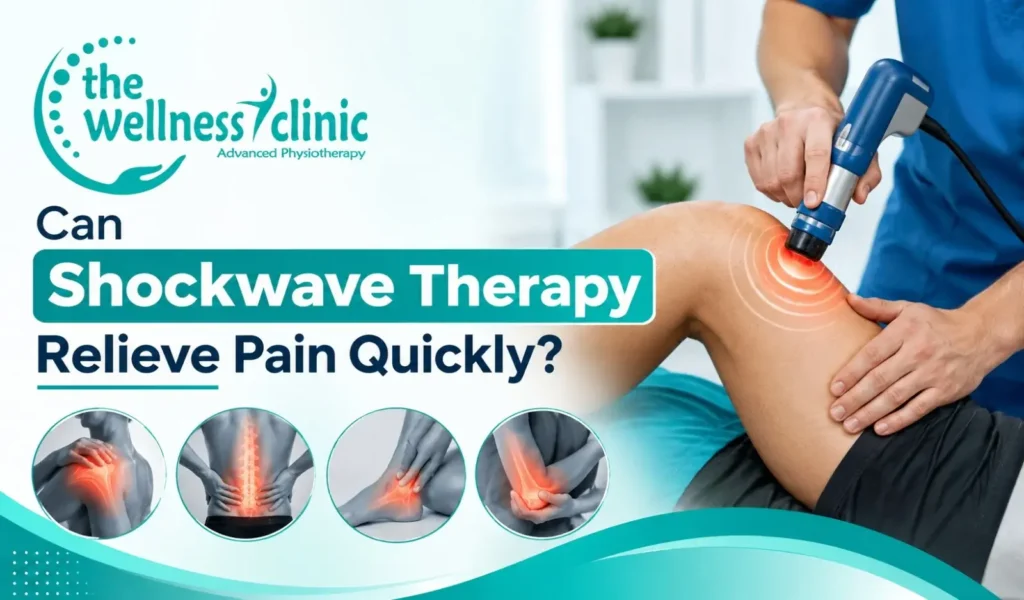
What Is Shockwave Therapy?
Shockwave therapy is a non-invasive physiotherapy treatment that uses acoustic waves to support healing and reduce pain. If you need targeted shockwave therapy physiotherapy treatment Kolkata, this therapy may help manage certain tendon, muscle, and soft-tissue problems with professional guidance.
At The Wellness Clinic, physiotherapists may consider shockwave therapy as part of a personalised treatment plan based on your symptoms, medical history, and physical assessment.
Shockwave therapy offers a non-invasive alternative to surgery without requiring an incision.. Therefore, it can be an attractive option for selected musculoskeletal conditions when a physiotherapist considers it appropriate.
How Does Shockwave Therapy Reduce Pain?
How does shockwave therapy reduce pain? It uses focused acoustic energy to stimulate responses in targeted tissues. The treatment may help improve local circulation, support tissue repair, reduce sensitivity, and encourage natural healing.
However, results can vary depending on the condition, severity, duration of symptoms, and individual response to treatment.
What Conditions Can Shockwave Therapy Treat?
What conditions can shockwave therapy treat? Physiotherapists commonly consider it for selected chronic or persistent musculoskeletal problems, particularly those involving tendons and soft tissues.
Potential applications may include:
- Plantar fasciitis
- Achilles tendon problems
- Tennis elbow
- Golfer’s elbow
- Patellar tendon pain
- Certain shoulder tendon problems
- Chronic tendon-related pain
- Muscle and soft-tissue conditions
- Certain sports-related injuries
A proper assessment remains important because not every painful condition requires shockwave therapy.
How Does Shockwave Therapy Work?
Shockwave therapy uses a specialised device to deliver acoustic energy into targeted tissues.
A standard shockwave therapy session generally follows these steps:
- Physiotherapy assessment – The physiotherapist identifies the painful area and evaluates your movement.
- Treatment planning – The therapist determines whether shockwave therapy suits your condition.
- Positioning – You sit or lie comfortably while the treatment area remains accessible.
- Application – The therapist places the applicator over the targeted area.
- Controlled pulses – The device delivers acoustic waves at an appropriate intensity.
- Post-treatment guidance – You receive advice about activity, exercises, and follow-up care.
The treatment parameters can vary depending on the condition and individual tolerance.
What Are the Benefits of Shockwave Therapy?
When appropriately prescribed, shockwave therapy may offer several potential benefits.
Non-Invasive Treatment
Shockwave therapy does not require surgical incisions. Consequently, it can provide a non-surgical treatment option for selected musculoskeletal problems.
Targeted Treatment
The physiotherapist can focus the acoustic waves on a specific painful or affected area. This targeted approach supports condition-specific treatment planning.
Supports Natural Healing
Shockwave therapy may stimulate tissue responses associated with the body’s healing processes. It can therefore complement rehabilitation exercises and other physiotherapy techniques.
May Help Persistent Pain
Some people seek shockwave therapy when pain continues despite conventional approaches. A physiotherapist can determine whether it fits into a broader rehabilitation plan.
Can Complement Exercise Therapy
Shockwave therapy often works best as part of an integrated treatment approach rather than as an isolated solution. Exercises, mobility work, strengthening, posture correction, and activity modification may also play important roles.
Who May Need Shockwave Therapy Physiotherapy?
Shockwave therapy may suit people experiencing persistent tendon or soft-tissue pain that has not improved sufficiently with other conservative approaches.
You may consider discussing it with a physiotherapist if you experience:
- Long-lasting tendon pain
- Sports-related soft-tissue injuries
- Persistent heel pain
- Recurrent elbow pain
- Certain shoulder tendon problems
- Pain that limits physical activity
- Difficulty returning to exercise because of persistent symptoms
However, treatment suitability depends on an individual assessment.
When Should You Consult a Physiotherapist for Shockwave Therapy?
If you are considering treatment, consult a physiotherapist for shockwave therapy rather than choosing it solely because you have a particular diagnosis.
A physiotherapist can assess:
- Pain location
- Pain duration
- Movement limitations
- Muscle strength
- Previous injuries
- Current activity level
- Existing medical conditions
- Previous treatments
- Functional limitations
This assessment helps determine whether shockwave therapy belongs in your rehabilitation plan.
Shockwave Therapy vs Deep Tissue Massage
Shockwave therapy and deep tissue massage use different treatment approaches. Understanding the difference can help you choose the right professional care.
| Feature | Shockwave Therapy | Deep Tissue Massage |
| Main approach | Acoustic energy | Manual pressure and massage |
| Primary focus | Targeted tissue stimulation | Muscles and soft tissues |
| Common use | Selected tendon and musculoskeletal problems | Muscle tightness and soft-tissue discomfort |
| Treatment method | Device-based | Hands-on |
| Treatment intensity | Adjustable acoustic pulses | Adjustable manual pressure |
| Rehabilitation role | Can complement physiotherapy | Can complement mobility and recovery |
| Professional assessment | Recommended | Recommended |
If you are searching for a Deep Tissue Massage Therapy Clinic in Kolkata, remember that massage and shockwave therapy address different treatment goals. A physiotherapist can help determine which approach—or combination—may suit your needs.
What Should You Expect During Shockwave Therapy?
During treatment, the physiotherapist applies a specialised applicator to the targeted area.
You may feel tapping, pressure, or mild discomfort as the acoustic pulses are delivered. The intensity can often be adjusted according to your tolerance and treatment requirements.
Afterward, some people may experience temporary tenderness or sensitivity around the treated area. Your physiotherapist can provide specific aftercare advice based on your condition.
Importantly, communicate clearly if the treatment becomes excessively uncomfortable.
Is Shockwave Therapy Safe?
Shockwave therapy can be appropriate for many people when a trained healthcare professional selects and administers it correctly.
However, it may not suit everyone. A physiotherapist should review your health history and treatment goals before recommending it.
You should disclose relevant medical information, current medications, previous injuries, and any other factors that could affect treatment suitability.
Do not self-select shockwave therapy simply because another person experienced good results. Check our video link: https://www.youtube.com/channel/UCNVKU6s4GdJZKE0USL0q3sg
What Should You Avoid After Shockwave Therapy?
Your physiotherapist may provide personalised restrictions depending on the condition being treated. In general, following professional aftercare instructions can support your rehabilitation.
You may be advised to:
- Avoid excessive loading of the treated area temporarily.
- Follow prescribed stretching or strengthening exercises.
- Maintain appropriate activity levels.
- Monitor unusual or worsening symptoms.
- Attend recommended follow-up sessions.
- Report persistent or severe discomfort.
Following a structured rehabilitation programme can improve the overall value of treatment.
Why Choose a Physiotherapy Clinic for Shockwave Treatment?
Choosing an experienced physiotherapy clinic provides more than access to a treatment device. Effective rehabilitation starts with identifying the underlying problem and selecting appropriate interventions.
A quality clinic should focus on:
- Individual assessment
- Evidence-informed treatment planning
- Appropriate treatment parameters
- Functional rehabilitation
- Exercise prescription
- Progress monitoring
- Patient education
- Safe treatment practices
For people searching for the Best Physiotherapy Clinic in Saltlake, Kolkata, The Wellness Clinic can position shockwave therapy within a broader physiotherapy and rehabilitation approach.
How Shockwave Therapy Fits Into Physiotherapy?
Shockwave therapy should not be viewed as a standalone treatment topic. It connects naturally with a broader physiotherapy content cluster covering pain management, sports injuries, rehabilitation, mobility, and recovery.
Related topics include:
- Physiotherapy for sports injuries
- Treatment for chronic tendon pain
- Plantar fasciitis physiotherapy
- Tennis elbow physiotherapy
- Deep tissue massage
- Muscle recovery therapy
- Exercise therapy
- Manual therapy
- Pain management physiotherapy
- Injury prevention
- Post-injury rehabilitation
This broader approach helps patients understand how different therapies can work together within personalised rehabilitation. Check Patient’s Feedback: https://thewellnessclinics.in/sucess-story/
Conclusion
Shockwave therapy offers a non-invasive option for selected tendon, muscle, and soft-tissue problems. However, effective care starts with accurate assessment and personalised rehabilitation. The Wellness Clinic combines physiotherapy expertise with targeted treatment planning to support recovery. If persistent pain affects your movement or activity, consult a physiotherapist for shockwave therapy and choose evidence-informed care suited to your needs. Visit our map click the link: https://maps.app.goo.gl/TNLp8EM8RZjkh3RaA
Frequently Asked Questions About Shockwave Therapy
What is shockwave therapy used for?
Shockwave therapy is used for selected musculoskeletal and tendon-related problems. Physiotherapists may consider it for conditions such as plantar fasciitis, certain tendon problems, and persistent soft-tissue pain.
Does shockwave therapy hurt?
You may experience tapping, pressure, or mild discomfort during treatment. The intensity can usually be adjusted according to your tolerance and the treatment area.
How long does a shockwave therapy session take?
Session length can vary depending on the treatment area, condition, and treatment plan. Your physiotherapist can explain the expected duration during your assessment.
How many shockwave therapy sessions are needed?
The number of sessions varies from person to person. Your physiotherapist will consider your condition, symptom duration, treatment response, and rehabilitation goals before recommending a treatment schedule.
Can shockwave therapy replace physiotherapy exercises?
Not necessarily. Shockwave therapy can complement rehabilitation, but exercises and movement-based treatment often remain important for improving strength, mobility, and function.
Is shockwave therapy suitable for sports injuries?
It may be suitable for certain sports-related tendon and soft-tissue problems. A physiotherapist should assess the injury before recommending treatment.
Can shockwave therapy treat chronic pain?
It may help select chronic musculoskeletal conditions, particularly some tendon-related problems. However, chronic pain has many possible causes, so proper assessment remains essential.
Where can I find shockwave therapy physiotherapy treatment in Kolkata?
People looking for shockwave therapy physiotherapy clinic Kolkata services should choose a clinic where qualified physiotherapists assess the condition before recommending treatment.
Recent Posts

How Can You Stay Healthy and Active After Turning 60?
October 15, 2026
Can Shockwave Therapy Relieve Pain Quickly?
October 6, 2026

How Can You Revive Spine Health With Physiotherapy?
September 30, 2026

How Desk Jobs Are Affecting Your Body Silently
September 25, 2026

Can Physiotherapy Help Treat Trigger Fingers?
September 23, 2026

Can Physiotherapy Help Tennis Elbow Heal Faster?
September 16, 2026