
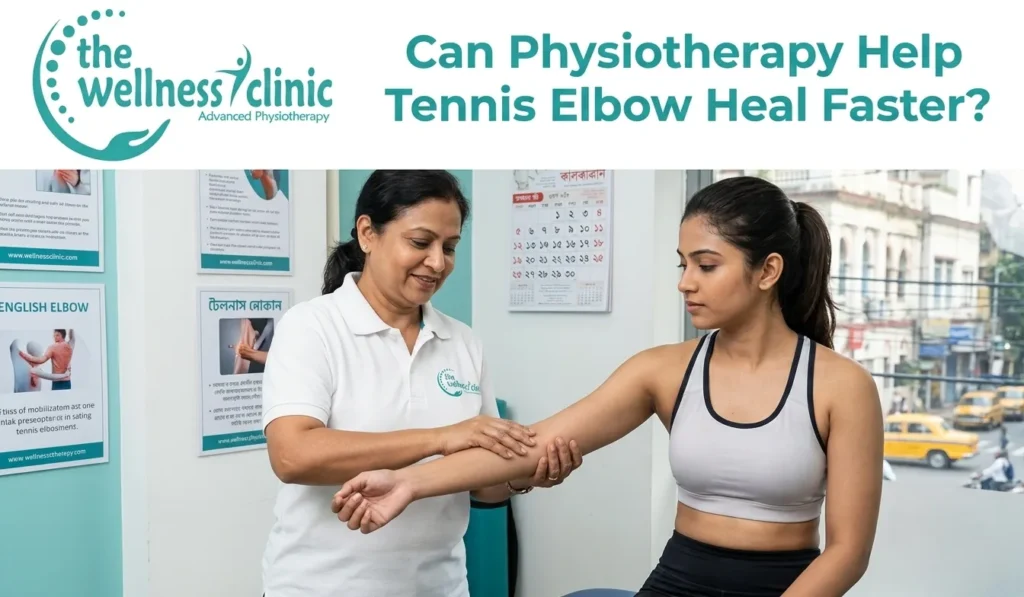
Can Advanced Physiotherapy Treat Tennis Elbows at a Clinic?
Tennis elbow can make gripping, lifting, typing, and everyday movements uncomfortable. Advanced physiotherapy focuses on reducing pain, improving elbow function, and supporting tendon recovery through personalised treatment. But can advanced physiotherapy really help tennis elbow? Understanding the right exercises, manual techniques, activity modifications, and rehabilitation strategies can help patients make informed decisions about managing persistent elbow pain safely and effectively.
Can advanced physiotherapy treat tennis elbow effectively? A specialised approach combines assessment, therapeutic exercises, manual therapy, movement correction, and progressive strengthening to address the underlying tendon problem. Choosing a Best Tennis Elbow Treatment Clinic in Kolkata can provide structured rehabilitation based on individual symptoms, functional limitations, activity levels, and recovery goals rather than relying only on temporary pain relief.
Can Advanced Physiotherapy Help Treat Tennis Elbows?
Can advanced physiotherapy help treat tennis elbow? Yes, physiotherapy can play an important role in managing tennis elbow, particularly when treatment is tailored to the person’s symptoms and functional needs. A physiotherapist may assess pain, grip strength, elbow movement, wrist mechanics, shoulder function, posture, and activity-related loading before developing a rehabilitation plan.
The condition commonly involves pain around the outer elbow associated with overuse or tendon loading. Treatment therefore generally focuses on managing symptoms while gradually improving the tendon’s ability to tolerate everyday and sporting activities.
What Is a Tennis Elbow?
Tennis elbow, medically known as lateral elbow tendinopathy, commonly causes pain around the outside of the elbow. Despite its name, it does not affect only tennis players.
Activities involving repeated gripping, lifting, wrist extension, or forearm rotation can increase stress around the elbow tendons.
Common symptoms may include:
- Pain around the outer elbow
- Tenderness near the elbow joint
- Reduced grip strength
- Discomfort while lifting objects
- Pain during wrist movements
- Difficulty opening jars or turning handles
- Symptoms that worsen with repetitive arm activity
A proper assessment helps distinguish tennis elbow from other causes of elbow and forearm pain. Cure from Best Physiotherapy Clinic in Saltlake, Kolkata.
Why Choose the Best Tennis Elbow Treatment Clinic in Kolkata?
A specialised Best Tennis Elbow Treatment Clinic in Kolkata can provide a structured rehabilitation pathway rather than relying on generic exercises.
A comprehensive approach may include:
- Clinical assessment
The physiotherapist evaluates pain patterns, movement, strength, and functional limitations. - Individualised treatment planning
Exercises and therapy techniques are selected according to the patient’s condition and activity requirements. - Pain-management strategies
Appropriate physiotherapy techniques can help manage discomfort while rehabilitation progresses. - Progressive strengthening
Gradually increasing tendon loading can help improve functional capacity. - Movement correction
Identifying problematic movement patterns may help reduce unnecessary strain. - Return-to-activity planning
Patients can receive guidance on safely returning to work, exercise, sports, or daily activities.
How Does Advanced Physiotherapy Treat Tennis Elbows?
Advanced physiotherapy generally does not rely on a single treatment technique. Instead, the rehabilitation plan may combine several evidence-informed approaches.
- Detailed Physiotherapy Assessment
The first step is understanding why the elbow hurts.
A physiotherapist may evaluate:
- Pain location and intensity
- Grip strength
- Wrist and forearm movement
- Elbow mobility
- Shoulder mechanics
- Repetitive activities
- Sporting technique
- Work-related movements
- Previous injuries
This assessment helps create an appropriate rehabilitation strategy.
- Therapeutic Exercises for Tennis Elbow
Exercise-based rehabilitation is an important component of tennis elbow management.
Depending on the individual’s condition, a physiotherapist may introduce:
- Wrist extensor exercises
- Isometric exercises
- Eccentric strengthening
- Forearm strengthening
- Grip-strength exercises
- Progressive resistance training
- Functional movement exercises
Exercises should be progressed according to symptoms, strength, and functional tolerance.
- Manual Therapy
Manual therapy may be incorporated when appropriate to address movement restrictions and support comfortable movement.
Depending on the assessment, treatment can involve techniques targeting:
- Elbow mobility
- Wrist mobility
- Forearm movement
- Soft-tissue restrictions
- Surrounding joint mechanics
Manual therapy is generally used as part of a broader rehabilitation programme rather than as the sole treatment.
- Tendon Loading and Strength Rehabilitation
One important rehabilitation principle is progressive tendon loading.
Instead of completely avoiding movement for an extended period, an appropriately designed programme can gradually expose the tendon to manageable levels of resistance.
Progression may involve:
Low-load exercises → resistance exercises → functional strengthening → activity-specific loading
The exact progression should be individualised.
- Ergonomic and Activity Modification
Repeated movements can contribute to persistent symptoms.
A physiotherapist may recommend changes such as:
- Adjusting workstation positioning
- Modifying lifting techniques
- Taking appropriate activity breaks
- Reducing repetitive gripping temporarily
- Changing sporting technique where necessary
- Using suitable equipment or grip modifications
The goal is not necessarily complete inactivity but appropriate management of tendon load.
What Are the Benefits of Tennis Elbow Physiotherapy?
A structured tennis elbow physiotherapy clinic near me can provide rehabilitation focused on improving function as well as managing pain.
Potential benefits include:
| Physiotherapy Approach | Potential Rehabilitation Goal |
| Pain-management techniques | Improve comfort during movement |
| Therapeutic exercises | Build strength and control |
| Progressive tendon loading | Improve load tolerance |
| Grip strengthening | Improve hand and forearm function |
| Manual therapy | Support mobility |
| Activity modification | Reduce aggravating loads |
| Ergonomic guidance | Improve movement habits |
| Functional rehabilitation | Support return to daily activities |
Results vary depending on symptom duration, severity, activity demands, adherence to rehabilitation, and the underlying diagnosis.
Which Exercises Help the Tennis Elbow?
Exercise selection should be based on an individual assessment. Common rehabilitation categories include:
Isometric Wrist Exercises
These involve contracting the muscles without significant joint movement. They may be introduced during stages when movement-related discomfort needs to be carefully managed.
Eccentric Wrist Extensor Exercises
Controlled lengthening exercises can be incorporated into progressive tendon rehabilitation when clinically appropriate.
Grip Strengthening
Grip exercises may help restore forearm function, particularly when gripping has become painful or weak.
Forearm Strengthening
Progressive resistance exercises can target the muscles involved in wrist and forearm control.
Functional Exercises
Later-stage rehabilitation can incorporate movements that resemble work, sporting, or everyday activities.
Important: Exercise intensity, repetitions, resistance, and progression should be personalised. Continuing an exercise that causes significant or worsening pain may not be appropriate.
How Long Does Tennis Elbow Physiotherapy Take?
Recovery time varies considerably.
Factors that may influence rehabilitation include:
- How long symptoms have been present
- Severity of pain
- Tendon irritability
- Work demands
- Sporting activities
- General strength
- Previous injuries
- Consistency with rehabilitation
- Response to progressive loading
Some people improve over a relatively short period, while persistent or recurrent symptoms may require a longer rehabilitation programme.
A physiotherapist can monitor progress and modify treatment according to response.
Can Physiotherapy Prevent Tennis Elbows From Returning?
Physiotherapy can also focus on reducing factors associated with recurrence.
A prevention-oriented programme may include:
- Maintaining appropriate forearm strength
- Gradually increasing training loads
- Improving gripping technique
- Correcting repetitive movement patterns
- Taking suitable breaks during repetitive work
- Using appropriate sports equipment
- Continuing prescribed strengthening exercises
Long-term management should focus on maintaining the capacity of the muscles and tendons to handle the activities required of them. Book an appointment click: https://thewellnessclinics.in/contact-us
When Should You Visit a Tennis Elbow Physiotherapy Clinic Near Me?
Consider professional assessment if elbow pain:
- Continues despite activity modification
- Interferes with work or sports
- Makes gripping difficult
- Causes persistent weakness
- Keeps returning after activity
- Does not improve as expected
- Limits normal arm movement
A physiotherapist can assess whether the symptoms are consistent with tennis elbow or whether another condition may need medical evaluation.
What Happens During an Advanced Tennis Elbow Physiotherapy Session?
A typical session may involve several stages:
Assessment → Diagnosis/clinical impression → Treatment planning → Exercise → Education → Progress monitoring
The physiotherapist may first ask about symptoms and activities that aggravate the elbow. Physical assessment can then guide treatment selection.
Treatment may include exercise therapy, manual techniques, load management, movement retraining, and home rehabilitation.
Follow-up sessions can be used to measure changes in pain, strength, movement, and functional ability.
Tennis Elbow Treatment: Physiotherapy vs Rest Alone
Rest can sometimes reduce irritation from an aggravating activity, but prolonged avoidance of all loading may not address reduced strength or load tolerance.
| Factor | Rest Alone | Physiotherapy Rehabilitation |
| Pain management | May reduce activity-related irritation | Can include structured symptom-management strategies |
| Strength | Limited strengthening stimulus | Progressive strengthening |
| Tendon loading | Usually reduced | Gradually progressed |
| Movement assessment | Not provided | Individual assessment |
| Activity guidance | Limited | Personalised modifications |
| Return to activity | May be uncertain | Can be progressively planned |
The appropriate approach depends on the individual’s symptoms and diagnosis.
How to Book Advanced Physiotherapy for Tennis Elbows?
If persistent elbow pain is affecting work, exercise, or daily activities, you can book advanced physiotherapy for tennis elbow following a professional assessment.
Before choosing a clinic, consider whether it provides:
- Qualified physiotherapy professionals
- Individual assessment
- Personalised rehabilitation
- Progressive strengthening
- Functional rehabilitation
- Clear home-exercise guidance
- Progress monitoring
- Appropriate referral when symptoms require further medical assessment
Choosing care based on these factors can help ensure that treatment addresses both symptoms and functional needs. Know Our success story for clients click: https://thewellnessclinics.in/sucess-story
Tennis Elbow Rehabilitation: Pillar and Cluster Content Strategy
For stronger topical authority, this article can function as a pillar page around tennis elbow physiotherapy.
Suggested Pillar Page
Advanced Physiotherapy for Tennis Elbow: Complete Treatment Guide
Supporting Cluster Pages
Create supporting articles targeting specific search intents:
- What Causes Tennis Elbows?
- Best Exercises for Tennis Elbow
- How Long Does the Tennis Elbow Take to Heal?
- Can Physiotherapy Cure Tennis Elbows?
- Tennis Elbow vs Golfer’s Elbow
- When Should You See a Physiotherapist for Elbow Pain?
- How Does Progressive Loading Help Tendon Recovery?
- Tennis Elbow Prevention Exercises
- Tennis Elbow Physiotherapy After Sports Injury
- How to Manage Tennis Elbow at Work
These cluster pages can internally link back to the main Best Tennis Elbow Treatment Clinic in Kolkata page using descriptive, contextually relevant anchor text.
Conclusion
Advanced physiotherapy can provide a structured approach to tennis elbow rehabilitation by combining assessment, symptom management, progressive strengthening, tendon loading, movement correction, and activity guidance. A specialised clinic can tailor treatment according to individual needs and functional goals. If persistent elbow pain affects daily activities or sport, professional assessment can help determine an appropriate rehabilitation pathway. Click our map link to visit our address click: https://maps.app.goo.gl/gGcPeDQoYCWKtXND8
Frequently Asked Questions About Advanced Physiotherapy for Tennis Elbow
Can advanced physiotherapy help treat tennis elbow?
Yes. Physiotherapy can help manage tennis elbow through individual assessment, progressive strengthening, tendon-loading exercises, movement modification, and functional rehabilitation.
What is the best treatment for tennis elbow?
Treatment depends on the cause, severity, duration, and functional limitations. Physiotherapy may be an important component of conservative management, particularly when rehabilitation is individually structured.
Can a tennis elbow heal without surgery?
Many cases of tennis elbow can be managed conservatively. The appropriate treatment depends on the diagnosis and individual clinical circumstances.
How does physiotherapy reduce tennis elbow pain?
Physiotherapy may combine symptom-management strategies with progressive exercise, load modification, and movement rehabilitation to improve function and tolerance to activity.
Which exercises are useful for tennis elbow?
Depending on the rehabilitation stage, exercises may include isometric, eccentric, resistance, grip, forearm, and functional strengthening exercises.
Should I completely rest my arm with tennis elbow?
Complete prolonged rest is not necessarily appropriate for everyone. Activity modification and appropriately progressed loading may be recommended depending on symptoms and clinical assessment.
How long does tennis elbow take to recover with physiotherapy?
Recovery varies between individuals. Symptom duration, tendon irritability, activity demands, rehabilitation consistency, and response to treatment can all influence recovery time.
Can I exercise with a tennis elbow?
Some activities may be possible with appropriate modifications. A physiotherapist can help identify suitable exercises and determine how activity should be progressed.
When should I book advanced physiotherapy for tennis elbow?
Consider an assessment when elbow pain persists, affects gripping or daily activities, limits sports participation, or does not improve with appropriate activity modification.
Is tennis elbow only caused by playing tennis?
No. Tennis elbow can occur in people who do not play tennis. Repetitive gripping, lifting, wrist movements, occupational tasks, and other activities can place stress on the relevant tendons.
Recent Posts

How Can You Stay Healthy and Active After Turning 60?
October 15, 2026
Can Shockwave Therapy Relieve Pain Quickly?
October 6, 2026
How Can You Revive Spine Health With Physiotherapy?
September 30, 2026

How Desk Jobs Are Affecting Your Body Silently
September 25, 2026

Can Physiotherapy Help Treat Trigger Fingers?
September 23, 2026
Can Physiotherapy Help Tennis Elbow Heal Faster?
September 16, 2026