
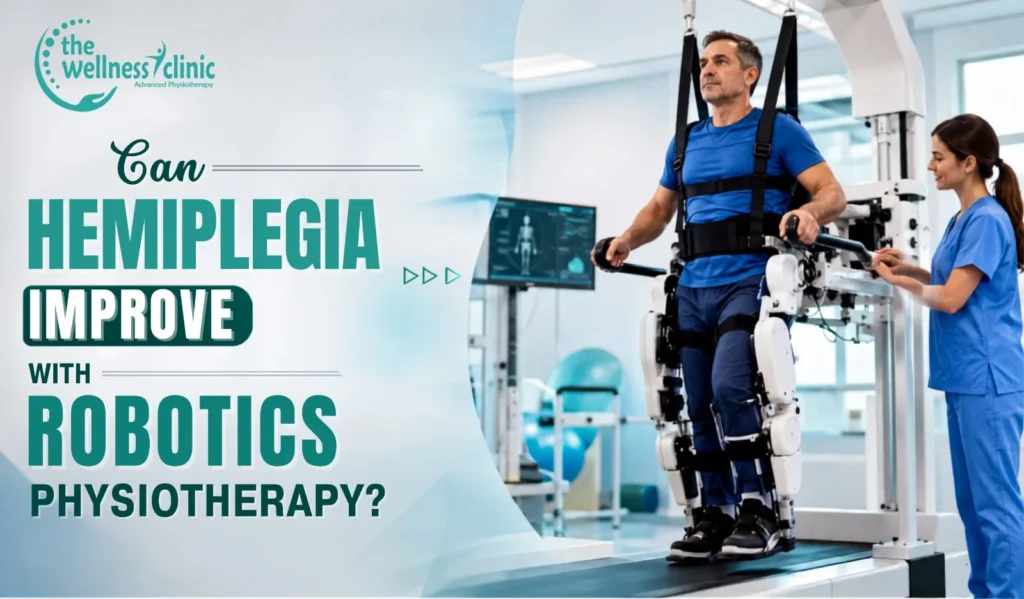
Can Robotic Physiotherapy Help Treat Hemiplegia?
Hemiplegia can affect movement, balance, strength, and independence after neurological injury. Understanding What are the common symptoms of hemiplegia? and starting appropriate rehabilitation early can support functional recovery and improve daily mobility.
Can robotic physiotherapy help treat hemiplegia? Yes, robotic-assisted rehabilitation may support repetitive, task-specific movement training under professional supervision. It can complement conventional physiotherapy by helping patients practise controlled movements, improve coordination, and work toward functional goals.
For people searching for a Best Neuro Rehabilitation Centre in Kolkata, rehabilitation should be individualized according to the person’s neurological condition, mobility level, muscle tone, balance, and recovery goals.
What Is Hemiplegia?
Hemiplegia refers to significant weakness or paralysis affecting one side of the body. It can involve the arm, leg, face, or several areas on the same side.
Hemiplegia is not a single disease. It is usually a consequence of damage affecting parts of the brain responsible for movement.
Common causes can include:
- Stroke
- Traumatic brain injury
- Brain tumour
- Cerebral palsy
- Certain neurological conditions
- Brain infections
- Other acquired brain injuries
The pattern and severity of impairment vary considerably between individuals.
What Are the Common Symptoms of Hemiplegia?
What are the common symptoms of hemiplegia? Symptoms can vary based on the area of the nervous system affected and the severity of the neurological damage. .
Common problems may include:
- Weakness or paralysis on one side
- Difficulty walking
- Poor balance and coordination
- Reduced hand or arm function
- Muscle stiffness or spasticity
- Changes in sensation
- Difficulty performing everyday activities
- Abnormal movement patterns
- Reduced endurance
- Difficulty maintaining posture
Some people may also experience communication, swallowing, vision, cognitive, or emotional difficulties depending on the underlying neurological injury.
How Does Hemiplegia Affect Walking?
Hemiplegia can change the way a person stands, transfers weight, takes steps, and maintains balance.
Walking difficulties may occur because of:
- Reduced leg strength
- Altered muscle tone
- Poor postural control
- Reduced ankle movement
- Difficulty shifting weight
- Impaired coordination
- Fear of falling
- Reduced cardiovascular endurance
Rehabilitation therefore focuses on more than simply strengthening one leg. Therapists may work on posture, balance, gait mechanics, transfers, endurance, and functional movement.
Can Physiotherapy Help With Hemiplegia Recovery?
Can physiotherapy help with hemiplegia recovery? Physiotherapy can play an important role in neurological rehabilitation. Treatment is generally designed around the person’s current abilities and functional objectives.
A physiotherapy programme may include:
- Strength and mobility exercises
- Balance training
- Gait rehabilitation
- Transfer practice
- Task-specific movement training
- Postural exercises
- Coordination activities
- Flexibility and range-of-motion exercises
- Functional activity training
- Assistive-device training when appropriate
Recovery can vary significantly. Some patients make substantial functional gains, while others may require longer-term rehabilitation and support.
Can Robotic Physiotherapy Improve Walking After a Stroke?
Can robotic physiotherapy improve walking after a stroke? Robotic-assisted gait rehabilitation may help selected patients practise repetitive walking movements with structured support.
Robotic systems can potentially provide:
- Repetitive stepping practice
- Controlled movement assistance
- Consistent training intensity
- Task-specific gait practice
- Progressive rehabilitation challenges
- Objective training feedback, depending on the technology
Robotic therapy should generally be viewed as a complement to comprehensive rehabilitation rather than a replacement for clinical assessment and therapist-led treatment.
How Can Robotic Neuro Physiotherapy Help Hemiplegia?
Robotic neuro physiotherapy uses technology-assisted systems to support repetitive and controlled movement training.
Depending on the patient’s condition and the equipment available, therapy may target:
- Gait Training
Robotic-assisted systems can help patients practise stepping and walking patterns while providing an appropriate level of support.
- Repetitive Movement
Repeated practice can help patients work on task-specific motor skills under professional supervision.
- Weight-Bearing
Some rehabilitation systems can support controlled weight-bearing and standing activities, depending on the patient’s capabilities.
- Movement Coordination
Structured exercises can provide opportunities to practise coordinated movements involving the affected side.
- Functional Independence
The broader goal is to translate therapy gains into activities such as walking, standing, transferring, and performing everyday tasks.
What Happens During Robotic Neuro Physiotherapy?
A typical programme begins with assessment rather than immediately placing the patient on a robotic device.
The rehabilitation team may evaluate:
| Assessment Area | Why It Matters |
| Muscle strength | Determines exercise difficulty |
| Muscle tone | Helps identify stiffness or spasticity |
| Balance | Guides standing and gait training |
| Walking ability | Establishes functional baseline |
| Joint mobility | Identifies movement restrictions |
| Coordination | Helps plan motor-control exercises |
| Endurance | Determines appropriate training intensity |
| Daily activities | Connects therapy to real-life goals |
The therapist can then determine whether robotic rehabilitation is appropriate and how it should complement conventional therapy.
Who May Benefit From Robotic Rehabilitation?
Robotic rehabilitation may be considered for selected patients with neurological movement difficulties, including some people recovering from stroke.
Suitability depends on factors such as:
- Medical stability
- Current mobility
- Muscle tone
- Joint range of motion
- Weight-bearing ability
- Balance
- Cognitive participation
- Specific rehabilitation goals
A professional neurological assessment is essential before starting technology-assisted rehabilitation.
Is Robotic Physiotherapy Suitable for Every Patient?
No. Robotic rehabilitation is not automatically appropriate for everyone with hemiplegia.
A therapist may need to consider:
- Severe joint restrictions
- Significant pain
- Unstable medical conditions
- Skin problems
- Severe spasticity
- Cardiovascular limitations
- Cognitive or communication challenges
- Equipment-specific contraindications
The exact criteria vary according to the rehabilitation system and the patient’s clinical circumstances.
How Does Conventional Physiotherapy Work With Robotic Therapy?
Robotic rehabilitation works best as part of a broader treatment strategy rather than as a standalone intervention.
A comprehensive programme may combine:
Assessment → Mobility training → Robotic-assisted practice → Strengthening → Balance work → Functional activities → Gait training → Home programme
This integrated approach allows therapists to connect technology-assisted exercises with practical activities required at home and in the community. The Wellness Clinic is Best Physiotherapy Centre For Balance Training in Kolkata for your fitness.
Why Is Repetition Important in Neurological Rehabilitation?
Repetition is an important component of many rehabilitation programmes because patients need opportunities to practise functional movements.
Task-specific practice can focus on movements such as:
- Sitting and standing
- Reaching
- Weight shifting
- Stepping
- Walking
- Turning
- Transferring
- Using the affected arm
The appropriate amount and intensity of practice should be determined by the rehabilitation professional.
How Can Families Support Hemiplegia Recovery?
Family involvement can make rehabilitation more consistent outside the clinic.
Helpful strategies may include:
- Following the prescribed home exercise programme.
- Encouraging safe movement rather than unnecessary dependence.
- Keeping frequently used objects accessible.
- Supporting recommended mobility strategies.
- Maintaining a safe walking environment.
- Attending scheduled rehabilitation sessions.
- Reporting new or worsening symptoms to the clinical team.
Family members should not independently change exercises or mobility techniques without professional guidance.
What Should You Look for in a Neuro Rehabilitation Centre?
When choosing a Best Neuro Rehabilitation Centre, consider whether the facility provides individualized neurological assessment and multidisciplinary rehabilitation. Check Video link: https://www.youtube.com/watch?v=UtfK8Z7voxU&pp=0gcJCRMMAYcqIYzv
Important factors include:
- Experienced neurological physiotherapists
- Individualized treatment planning
- Gait and balance rehabilitation
- Robotic-assisted rehabilitation where clinically appropriate
- Functional movement training
- Progress monitoring
- Patient and family education
- Appropriate safety protocols
- Goal-oriented rehabilitation
For patients seeking a Best Neuro Rehabilitation Centre in Kolkata, the quality of clinical assessment and individualized rehabilitation plan should be considered alongside available technology.
How Does The Wellness Clinic Approach Neuro Rehabilitation?
At The Wellness Clinic, neurological rehabilitation can be structured around functional goals, movement quality, progressive exercise, and patient-specific requirements.
Robotic neuro physiotherapy may be incorporated when clinically appropriate, while conventional physiotherapy, gait training, balance exercises, strengthening, and functional rehabilitation remain important components of the overall recovery process.
The objective is not simply to complete exercises but to help patients work toward greater movement efficiency, confidence, safety, and independence. Check Patient’s Testimonial or Reviews click: https://bit.ly/4cEl7TE
What Is the Long-Term Outlook for Hemiplegia?
Recovery from hemiplegia differs from person to person. The outcome depends on the cause, severity of neurological damage, affected functions, overall health, rehabilitation participation, and other individual factors.
Progress may occur gradually and may involve small improvements in:
- Walking distance
- Balance
- Arm function
- Transfers
- Standing tolerance
- Coordination
- Daily independence
Consistent reassessment helps the rehabilitation team modify treatment as abilities change.
Conclusion
Hemiplegia can significantly affect movement, balance, walking, and independence, but individualized neurological rehabilitation can support meaningful functional progress. Robotic physiotherapy may add structured, repetitive movement practice for suitable patients while complementing conventional therapy. Assessment, progressive training, patient education, and consistent follow-up remain essential for creating a safe, goal-focused recovery programme tailored to individual needs. Click the Map Address click: https://maps.app.goo.gl/GhGEC8hxnUA8KvCG7
Frequently Asked Questions
What are the common symptoms of hemiplegia?
Common symptoms include weakness or paralysis on one side of the body, difficulty walking, impaired balance, reduced coordination, muscle stiffness, altered sensation, and challenges with everyday activities.
Can robotic physiotherapy help treat hemiplegia?
Robotic physiotherapy may help selected patients practise repetitive, task-specific movements with controlled assistance. It is generally used as part of a broader neurological rehabilitation programme.
Can physiotherapy help with hemiplegia recovery?
Yes. Physiotherapy can support mobility, balance, strength, coordination, gait, transfers, and functional independence. The rehabilitation programme should be individualized according to the patient’s condition and goals.
Can robotic physiotherapy improve walking after a stroke?
Robotic-assisted gait rehabilitation may help selected stroke survivors practise repetitive walking movements. Its usefulness depends on the individual’s clinical condition, rehabilitation goals, and ability to participate safely.
How long does hemiplegia rehabilitation take?
There is no universal recovery timeline. Some patients progress over weeks or months, while others require longer-term rehabilitation. Progress depends on the underlying neurological injury and individual factors.
Is robotic therapy better than conventional physiotherapy?
Robotic therapy is not necessarily better in every situation. It can complement conventional physiotherapy by providing structured, repetitive practice when clinically appropriate.
Can hemiplegia improve completely?
Complete recovery cannot be guaranteed. Some individuals regain substantial function, while others continue to experience weakness or movement limitations. Early, appropriate and consistent rehabilitation can support the best possible functional outcome.
When should someone visit a neuro rehabilitation centre?
Professional neurological rehabilitation should be considered when hemiplegia affects walking, balance, strength, coordination, transfers, or daily activities. A clinical assessment can help determine appropriate treatment.
Recent Posts

How Can You Stay Healthy and Active After Turning 60?
October 15, 2026
Can Shockwave Therapy Relieve Pain Quickly?
October 6, 2026
How Can You Revive Spine Health With Physiotherapy?
September 30, 2026
How Desk Jobs Are Affecting Your Body Silently
September 25, 2026

Can Physiotherapy Help Treat Trigger Fingers?
September 23, 2026

Can Physiotherapy Help Tennis Elbow Heal Faster?
September 16, 2026