
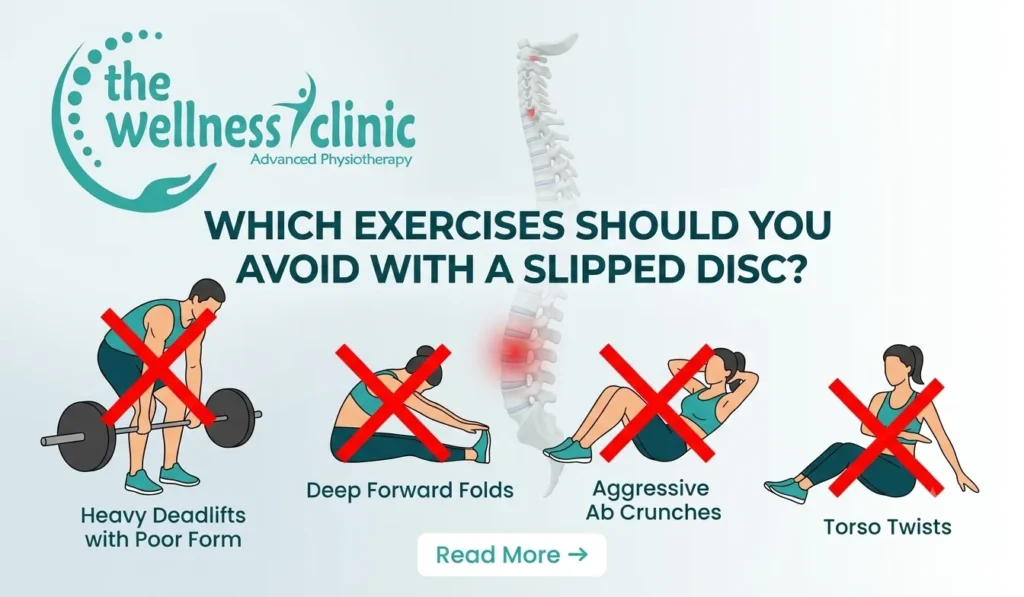
Which Exercises Should You Avoid With a Slipped Disc?
A slipped disc, often called a herniated or prolapsed disc, can cause back pain, stiffness, numbness, or pain that travels into the leg. Which exercises should you avoid with a slipped disc? The answer depends on the affected disc, symptoms, physical findings, and stage of recovery.
People searching for a Back Pain Treatment Clinic in Kolkata should understand that there is no single exercise list that applies to everyone. Some movements that aggravate one person’s symptoms may be tolerated by another. A qualified healthcare professional can assess the condition and create an appropriate exercise plan.
Which Exercises Should You Avoid With a Slipped Disc?
Certain movements may increase pain or place additional stress on the spine, particularly when performed with poor technique, excessive load, or during an acute flare-up.
Movements That May Need to Be Avoided or Modified
- Heavy lifting, especially from the floor
- Repeated forward bending
- Deep spinal flexion
- Forceful twisting
- High-impact jumping
- Heavy squats without proper supervision
- Heavy deadlifts during painful episodes
- Exercises that reproduce shooting leg pain
- Sudden, uncontrolled movements
- Prolonged positions that significantly worsen symptoms
Avoiding an exercise does not necessarily mean avoiding it permanently. A physiotherapist may gradually reintroduce certain movements when symptoms and functional capacity improve.
Why Can Certain Exercises Aggravate a Slipped Disc?
A herniated disc occurs when material from an intervertebral disc extends beyond its normal boundary and may irritate nearby spinal structures or nerves.
Depending on the individual, repeated bending, lifting, twisting, or high-impact activity may worsen symptoms. However, pain does not always mean that a movement is damaging the disc.
The important distinction is between temporary discomfort and symptoms that are progressively worsening or spreading. For Book an Appointment click: https://thewellnessclinics.in/contact-us/
Warning Signs During Exercise
Stop the exercise and seek professional advice if you experience:
- Increasing leg pain
- New or worsening numbness
- Increasing weakness
- Pain that becomes significantly more intense
- Symptoms that persist or worsen after exercise
- Difficulty performing normal activities
Severe or rapidly worsening neurological symptoms require prompt medical evaluation.
Exercises to Approach With Caution
| Exercise or Movement | Why It May Be Problematic | Safer Approach |
| Heavy deadlifts | High spinal loading | Use supervised modifications |
| Deep forward bends | May aggravate some symptoms | Maintain comfortable range |
| Heavy squats | Can increase spinal load | Reduce load and improve technique |
| Sit-ups | Repeated spinal flexion | Consider clinician-approved alternatives |
| Jumping exercises | Creates impact | Use low-impact options initially |
| Forceful twisting | Can aggravate symptoms | Avoid painful rotation |
| Heavy lifting from floor | Combines load and bending | Learn safe lifting mechanics |
| High-intensity workouts | May exceed current tolerance | Progress gradually |
This table is a general guide, not an individualized prescription.
What Movements Should You Avoid With a Slipped Disc?
The most important principle is to avoid movements that consistently worsen your symptoms, particularly pain radiating into the leg, increasing numbness, or weakness.
- Repeated Forward Bending
Activities involving frequent or deep bending may aggravate symptoms in some people.
Examples include:
- Repeated toe-touching
- Deep bending to the floor
- Certain poorly modified abdominal exercises
- Lifting objects while bent forward
The correct range of movement depends on the individual. Check Our Success story for recovery Disc pain click: https://thewellnessclinics.in/sucess-story/
- Heavy Lifting
Heavy lifting can place substantial demands on the lower back.
Instead of immediately returning to heavy weights, rehabilitation may involve:
- Reduced loads
- Controlled movement
- Neutral-spine techniques where appropriate
- Gradual strengthening
- Professional supervision
- Forceful Twisting
Rapid or loaded spinal rotation can be uncomfortable during recovery.
Exercises involving heavy rotational resistance should be approached cautiously if they reproduce symptoms.
- High-Impact Exercise
Running, jumping, and other high-impact activities may be poorly tolerated during some painful phases.
This does not mean everyone with a slipped disc must permanently avoid impact exercise. Activity can often be progressed according to symptoms, strength, and functional recovery.
Are Sit-Ups Bad for a Slipped Disc?
Sit-ups involve repeated spinal movement and may aggravate symptoms in some people. They are therefore not automatically appropriate during a painful episode.
A physiotherapist may recommend alternative core exercises that develop trunk strength without repeatedly provoking symptoms.
The objective of rehabilitation is not simply to strengthen the abdominal muscles. It is to improve functional movement, trunk control, strength, confidence, and tolerance to everyday activities. Visit Our Youtube Page for more details click: https://www.youtube.com/channel/UCNVKU6s4GdJZKE0USL0q3sg
Can You Exercise With a Slipped Disc?
In many cases, appropriate physical activity can form part of recovery. Complete inactivity is not automatically the best approach.
A healthcare professional may recommend:
- Gentle movement
- Walking
- Individualized mobility exercises
- Core strengthening
- Hip and lower-limb strengthening
- Postural and movement training
- Gradual return to normal activities
The specific exercises should be matched to the person’s symptoms and physical assessment.
What Is the Best Physiotherapy for Slipped Disc Pain?
There is no single best physiotherapy for slipped disc pain for every patient.
A personalized program may include:
Assessment
The physiotherapist reviews symptoms, movement, strength, functional limitations, and relevant medical history.
Symptom Management
Early treatment may focus on finding comfortable positions, modifying aggravating activities, and maintaining appropriate movement.
Mobility
Selected mobility exercises can help restore comfortable movement when appropriate.
Strengthening
Progressive strengthening may target the trunk, hips, and lower limbs according to individual needs.
Functional Training
Patients can gradually practise movements needed for work, household activities, sports, or daily life.
Return to Activity
Exercise intensity can be increased progressively as symptoms and functional capacity improve.
A Best Physiotherapy Clinic in Kolkata should ideally focus on individualized assessment rather than giving every patient the same exercise routine.
How Can You Exercise More Safely?
Follow these principles when returning to exercise:
- Start below your maximum capacity.
- Use controlled movements.
- Avoid sudden increases in training load.
- Pay attention to changes in symptoms.
- Prioritize technique.
- Modify exercises that provoke significant symptoms.
- Progress gradually.
- Follow professional rehabilitation guidance.
Pain During Exercise: What Should You Do?
Not every sensation during rehabilitation indicates injury. However, symptoms that become significantly worse, travel farther down a limb, or are accompanied by increasing numbness or weakness deserve professional review.
A physiotherapist can help determine whether an exercise should be modified, reduced, or temporarily stopped.
What About Walking With a Slipped Disc?
Walking is often a useful low-impact activity for people who can tolerate it, but the appropriate duration and pace vary.
Instead of forcing a long walk, some people may benefit from shorter, comfortable periods of movement throughout the day.
If walking consistently increases leg pain, numbness, weakness, or other concerning symptoms, seek professional advice.
How Does Physiotherapy Support Back Pain Recovery?
Physiotherapy can help people understand how to move safely while rebuilding strength and functional capacity.
A structured program may address:
- Pain-related movement limitations
- Muscle weakness
- Reduced mobility
- Poor movement patterns
- Reduced activity tolerance
- Fear of movement
- Return to work or exercise
For individuals seeking best back pain treatment for slipped discs, an evidence-informed assessment is more useful than relying on generic online exercise lists.
When Should You Stop Exercising and Seek Medical Help?
Certain symptoms should not be managed through exercise alone.
Seek urgent medical assessment for symptoms such as:
- New loss of bladder or bowel control
- Numbness around the groin or saddle region
- Significant or rapidly worsening weakness
- Severe symptoms following major trauma
- Progressive neurological problems
These symptoms can indicate a serious spinal problem requiring urgent evaluation.
How Can The Wellness Clinic Help?
The Wellness Clinic can be presented as a patient-focused setting where people with back pain can seek professional assessment and individualized rehabilitation guidance.
For slipped-disc-related symptoms, responsible care should begin with an appropriate assessment rather than assuming that every patient needs the same exercise restrictions. A qualified clinician can help determine suitable activity levels, exercise modifications, progression, and when further medical evaluation may be necessary.
Exercises to Avoid With a Slipped Disc
Exercises that may need to be avoided or modified include heavy lifting, deep forward bending, forceful twisting, high-impact jumping, heavy resistance exercises, and movements that significantly worsen radiating pain, numbness, or weakness. The appropriate restrictions depend on the individual’s diagnosis, symptoms, physical findings, and recovery stage. Check Our Patients Testimonial click: https://bit.ly/4wkq6A7
Frequently Asked Questions
Which exercises should you avoid with a slipped disc?
Exercises that significantly worsen symptoms may need to be avoided or modified. Common examples include heavy lifting, deep bending, forceful twisting, high-impact movements, and poorly controlled resistance exercises.
Can I go to the gym with a slipped disc?
Possibly. Gym exercise may be appropriate when adapted to your symptoms and recovery stage. A physiotherapist can recommend suitable exercises, loads, and movement modifications.
Are squats bad for a slipped disc?
Squats are not automatically harmful for everyone with a slipped disc. Heavy or poorly performed squats may aggravate symptoms in some people, so load, technique, depth, and individual tolerance matter.
Can I do sit-ups with a slipped disc?
Sit-ups may aggravate symptoms in some people because they involve repeated spinal movement. A physiotherapist can suggest alternative core exercises when appropriate.
Is walking good for a slipped disc?
Walking may be well tolerated by many people and can help maintain activity, but the appropriate distance and intensity depend on symptoms and individual recovery.
Can a slipped disc heal without surgery?
Many people with herniated discs improve with conservative management, although outcomes vary. Treatment decisions depend on symptoms, neurological findings, duration, and other clinical factors.
What is the best treatment for slipped-disc back pain?
Treatment depends on the individual’s condition. It may include activity modification, physiotherapy, exercise, pain management, and medical assessment when necessary.
When should I see a physiotherapist for slipped-disc pain?
Consider professional assessment when pain limits normal activities, symptoms persist, exercise is difficult, or you are unsure which movements are appropriate.
Can exercise make a slipped disc worse?
Certain exercises can aggravate symptoms when they exceed an individual’s current tolerance. Appropriate exercise selection, technique, and gradual progression can help reduce unnecessary aggravation.
Final Thought
Exercises for slipped-disc pain should be individualized rather than avoided based on generic lists. Heavy lifting, painful bending, forceful twisting, and high-impact movements may require temporary modification, depending on symptoms. Professional assessment can help identify suitable exercises and progression. With guidance from an experienced physiotherapy team, patients can work toward safer movement, improved strength, greater confidence, and better daily function. Check Our Physical Address click: https://maps.app.goo.gl/EgTCYNUoVbkH11G38
Recent Posts

How Can You Stay Healthy and Active After Turning 60?
October 15, 2026
Can Shockwave Therapy Relieve Pain Quickly?
October 6, 2026
How Can You Revive Spine Health With Physiotherapy?
September 30, 2026
How Desk Jobs Are Affecting Your Body Silently
September 25, 2026

Can Physiotherapy Help Treat Trigger Fingers?
September 23, 2026

Can Physiotherapy Help Tennis Elbow Heal Faster?
September 16, 2026